
Samagra Shiksha is India’s single, integrated centrally sponsored scheme for school education, covering everything from the pre-school stage to Class 12. Launched in 2018 by merging three earlier programmes, it treats schooling as one continuous journey rather than disconnected slabs.
The scheme is anchored in the National Education Policy (NEP) 2020 and the global Sustainable Development Goal for education, SDG-4. Its core promise is simple: equitable, inclusive, quality education for every child, regardless of background, ability, or location.
This guide explains what Samagra Shiksha actually merged, how the 5+3+3+4 structure works, its main objectives, how it is funded between the Centre and States, who it reaches, and where the scheme stands in 2026.
What Samagra Shiksha Actually Is, and What It Merged
Before 2018, school education was managed through separate vertical schemes that often worked in silos. Samagra Shiksha (समग्र शिक्षा) combined three major programmes into one framework: Sarva Shiksha Abhiyan for elementary education, Rashtriya Madhyamik Shiksha Abhiyan for secondary education, and the Teacher Education scheme.
That merger was the point, not a formality. When primary schooling, secondary schooling, and teacher training were planned separately, transitions between stages leaked students and reforms in one slab did not always carry into the next.
By treating school education as a continuum from pre-primary to senior secondary, the scheme can plan a child’s path end to end, align curriculum and assessment across stages, and route funds where retention and learning actually break down.
The 5+3+3+4 Structure It Supports
Samagra Shiksha underpins the school structure introduced under NEP 2020, which replaces the older 10+2 pattern with four developmental stages mapped to how children learn at different ages.
| Stage | Grades | Core approach |
| Foundational | Anganwadi to Grade 2 | Play- and activity-based, multilevel learning |
| Preparatory | Grades 3-5 | Discovery, interaction, light formal study |
| Middle | Grades 6-8 | Experiential, integrated subjects |
| Secondary | Grades 9-12 | Critical thinking, subject flexibility |
The logic behind the split is cognitive, not merely administrative. Early years lean on play because that is how foundational skills form; later stages add abstraction, subject choice, and critical thinking as reasoning matures. Each boundary is designed as a smooth handover rather than a cliff.
Core Objectives: Turning Policy Into Classroom Practice
A policy document only matters if it changes what happens in a classroom, and Samagra Shiksha translates NEP 2020 into measurable goals. The most important base is foundational literacy and numeracy, or FLN.
Under the NIPUN Bharat initiative launched in 2021, the aim is that every child attains basic reading-with-understanding and arithmetic by the early grades. A child who cannot read by Grade 3 struggles with every subject afterward, so this goal carries the rest of the reform.
The main objectives include
- strengthening foundational literacy and numeracy in the early grades
- supporting girls, children with special needs, and marginalized communities
- upgrading SCERTs and DIETs as teacher-education and training institutions
- aligning curriculum, assessment, and pedagogy with NEP 2020
- introducing vocational exposure from Grade 6 instead of waiting for senior secondary
Who It Covers, and the Wider Ecosystem
The scale is what makes Samagra Shiksha a national instrument rather than a small pilot. It covers roughly 1.16 million schools, more than 156 million students, and about 5.7 million teachers across government and aided institutions, from pre-primary to senior secondary.
What is less obvious is how many people it treats as part of the system. Education here is not just teacher plus textbook. School Management Committees give parents and the community a formal role, while block and cluster resource coordinators connect schools to district administration.
Classroom to Community: Why Local Ownership Matters
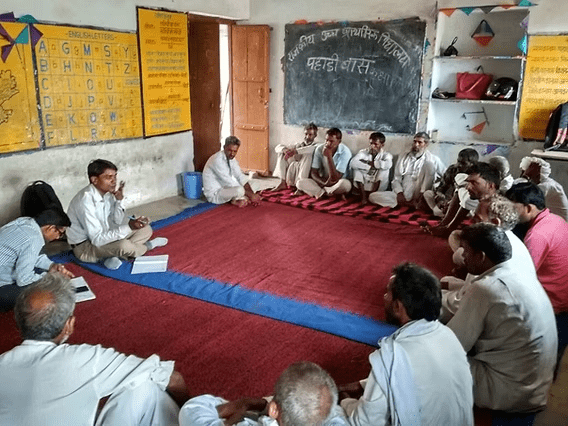
Reforms designed only in capital cities rarely fit a tribal hamlet in Odisha, a hill district in the northeast, or an urban settlement with high student mobility. Samagra Shiksha therefore works through a wider school ecosystem rather than only through classroom instructions.
Key stakeholders include
- students, teachers, and head teachers
- parents and guardians
- School Management Committees
- SCERTs, DIETs, block and cluster resource coordinators
- community volunteers, resource persons, and local education officials
When these groups share ownership, accountability rises and reforms are adapted to local reality instead of being imposed on it. That is why community participation is not a decorative feature of the scheme; it is part of how implementation survives on the ground.
How It Is Funded and Governed: A Centre-State Model
Samagra Shiksha runs on shared responsibility, not central command. States and Union Territories prepare annual work plans based on their own gaps, such as teacher shortages, missing toilets, weak learning outcomes, infrastructure needs, or access barriers.
Those plans are appraised and funded against expected results. The money follows a cost-sharing pattern that reflects each region’s capacity.
| Region type | Centre : State share |
| Most States and UTs with a legislature | 60 : 40 |
| North-Eastern and Himalayan States | 90 : 10 |
| UTs without a legislature | 100% Central |
For context on scale, the revamped phase known as Samagra Shiksha 2.0 was approved for 2021-22 to 2025-26 with a total outlay of about Rs 2.94 lakh crore. Governance leans on outcome-based monitoring through national dashboards and periodic data reviews rather than day-to-day micromanagement.
What It Targets on the Ground
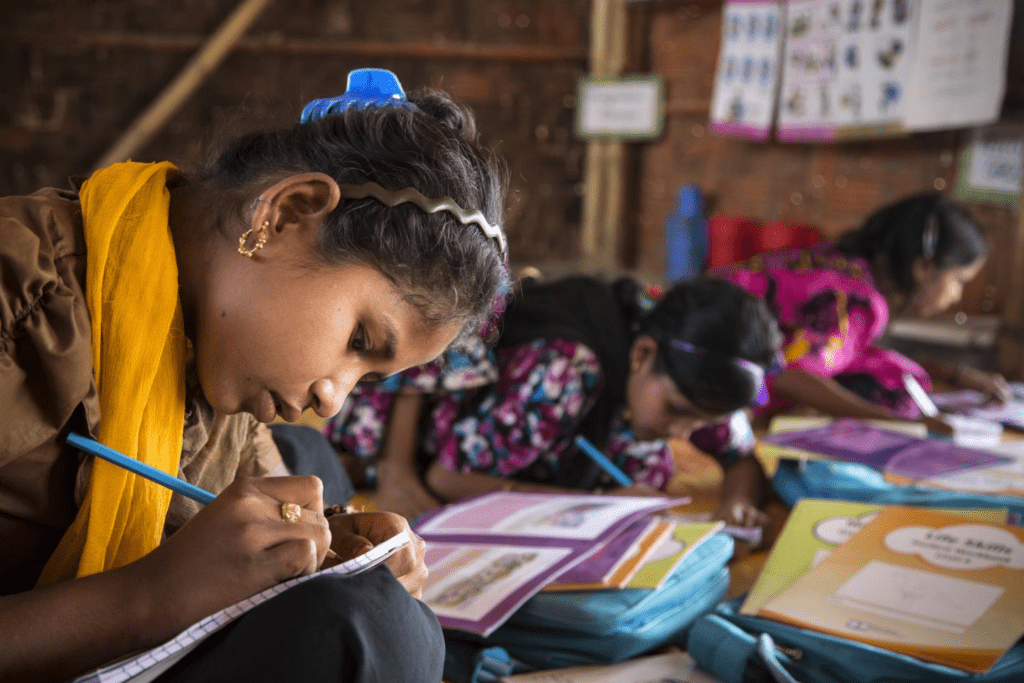
The objectives become concrete through interventions aimed at the points where children fall out of the system. Girls face higher dropout risk after primary school, so the scheme supports transport incentives in difficult areas, gender-sensitive toilets, and residential schooling for girls through KGBVs up to Class 12.
Remote regions get flexible norms because a standard urban model does not fit Ladakh, the northeast hills, or a tribal belt. Adjusted calendars, bilingual learning materials, and localised support help make schooling more realistic for children outside easy-access areas.
Digital inclusion runs through e-content and platforms like DIKSHA, with smart classrooms extending reach. The challenge of unstable connectivity in rural areas remains real, so the strongest implementation combines technology with offline support instead of assuming internet access is universal.
Teachers sit at the centre rather than the sidelines. Continuous training on FLN, activity-based pedagogy, and inclusive classrooms is delivered through blended and digital models so that remote districts are not left out of professional development.
Infrastructure, Safety, and the Learning Environment

Quality learning needs safe and dignified spaces. Under Samagra Shiksha, infrastructure is not cosmetic; it is functional and child-centric. Classrooms, libraries, drinking water, electricity, ramps, assistive devices, and gender-sensitive toilets all affect whether children attend regularly and stay enrolled.
These basics matter most for students who are already at risk of exclusion. A ramp can decide whether a child with a disability reaches class. A functional toilet can decide whether an adolescent girl continues after primary school. A library or laboratory can decide whether learning becomes active rather than purely rote.
Vocational Education and Real-World Skills
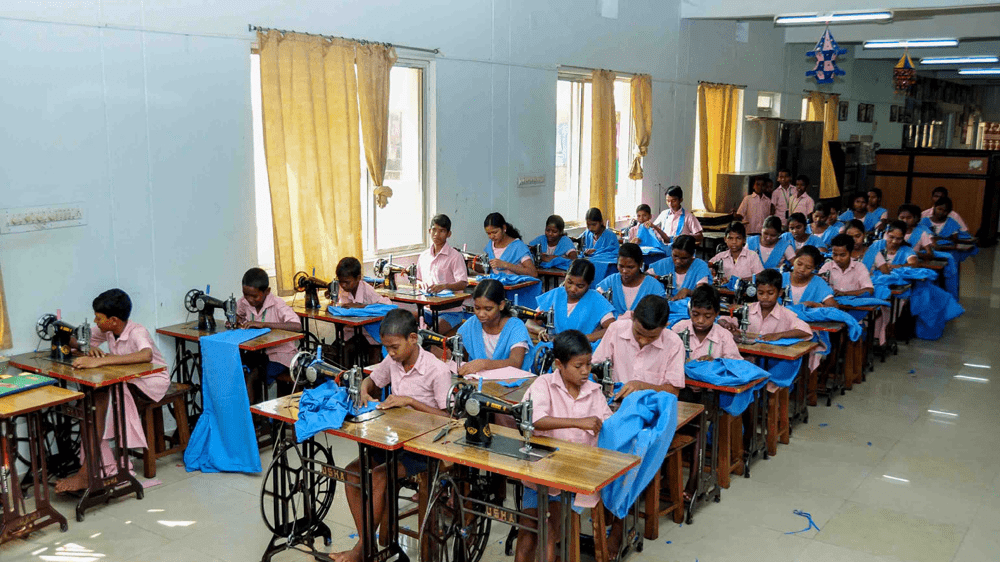
Schooling is no longer treated as exam preparation alone. Samagra Shiksha promotes early exposure to work-linked and skill-based learning, beginning from the middle stage rather than being reserved only for senior secondary students.
This matters because students gain awareness of local trades and services, basic employability skills, and respect for different forms of work. The shift aligns education with India’s demographic and economic realities, preparing learners for multiple pathways after school.
Where Samagra Shiksha Stands in 2026
This is the part many older explainers miss. The 2.0 phase ran through 31 March 2026. As of mid-2026, the scheme has not simply disappeared; the Centre granted a short interim extension while a restructured, more NEP-aligned version is finalised.
The timing matters practically. States build annual plans and budgets around central assistance for teacher salaries, infrastructure, learning materials, and access programmes. An interim extension keeps that pipeline running while the next phase is redesigned.
Officials have signalled that the next phase will lean harder into NEP 2020 priorities: foundational literacy and numeracy, early childhood care and education, learning outcomes over rote metrics, technology-enabled learning, and teacher capacity. The open question is whether the revamp deepens these reforms or lets them plateau.
When Was Samagra Shiksha Launched, and What Did It Merge?
Samagra Shiksha was launched in 2018 by integrating Sarva Shiksha Abhiyan, Rashtriya Madhyamik Shiksha Abhiyan, and Teacher Education into one framework spanning pre-school to Class 12.
Is Samagra Shiksha Still Running in 2026?
Yes. The 2021-26 phase concluded in March 2026, and the scheme continues under a short interim extension while a revamped, NEP-aligned version is being finalised.
Does Vocational Education Really Start in Grade 6?
Yes. The scheme deliberately introduces work-linked, skill-based exposure from the middle stage rather than reserving it for senior secondary. The goal is not to narrow a child’s future, but to widen practical understanding and build respect for work early.
Why Samagra Shiksha Matters to Every Family
For a parent or student, this is not a distant policy file. It shapes the daily experience of school: textbooks and uniforms, FLN support, ramps and assistive devices, toilets and transport, teacher training, vocational exposure, and community accountability.
The most useful way to understand the scheme is to treat it as a set of entitlements to check on, not an abstraction. Ask whether your school’s inclusion provisions, infrastructure basics, learning support, and teacher capacity programmes are actually in place. Those are the levers that decide whether a child stays, learns, and finishes.
With the scheme now in a transition year, that ground-level attention is exactly what keeps the reform honest.