
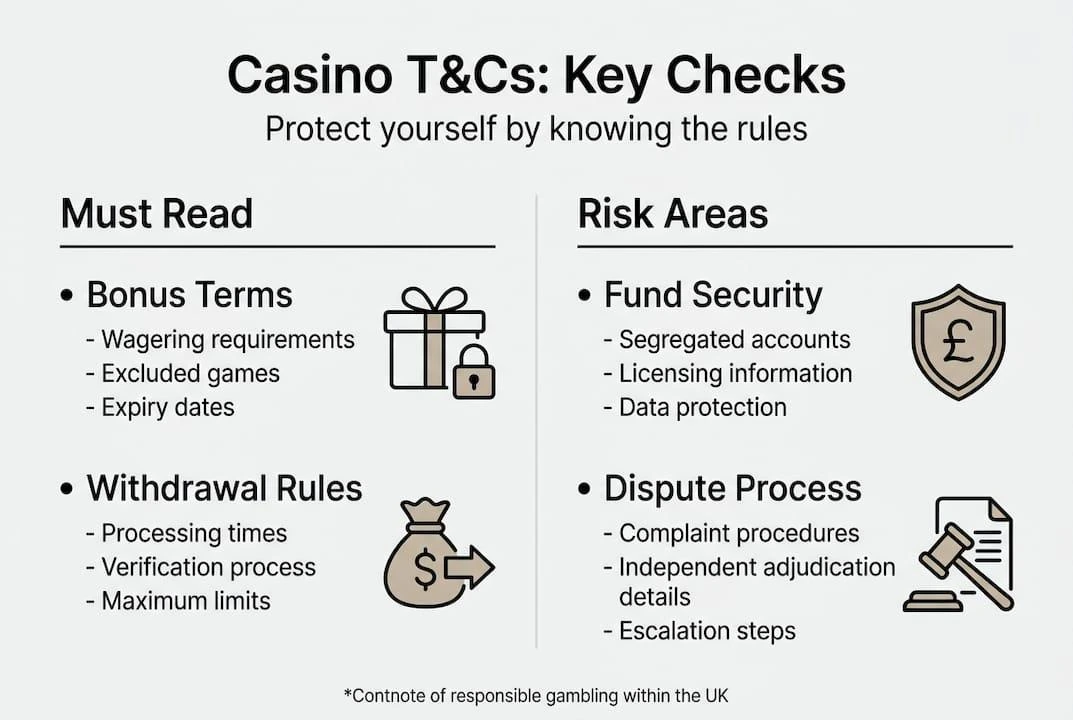
Most problems with online casinos don’t start during play — they start much earlier, the moment someone registers without reading either the license or the bonus terms. And money isn’t lost only to bad luck. Far more often it’s lost to a blocked withdrawal, an impossible wagering requirement, or a platform that simply stops replying. This breakdown is about telling workable terms from a trap, and keeping control before you ever deposit a cent.
The topic here is neutral: there’s no recommendation of any specific operator below, and no advice to gamble. There are criteria that help you decide deliberately — or decide not to at all.
Start Here: A License Isn’t Just a Line in the Footer
A license defines who’s responsible for the platform and where to complain if your money won’t come out. That makes it the first thing to check, not the last.
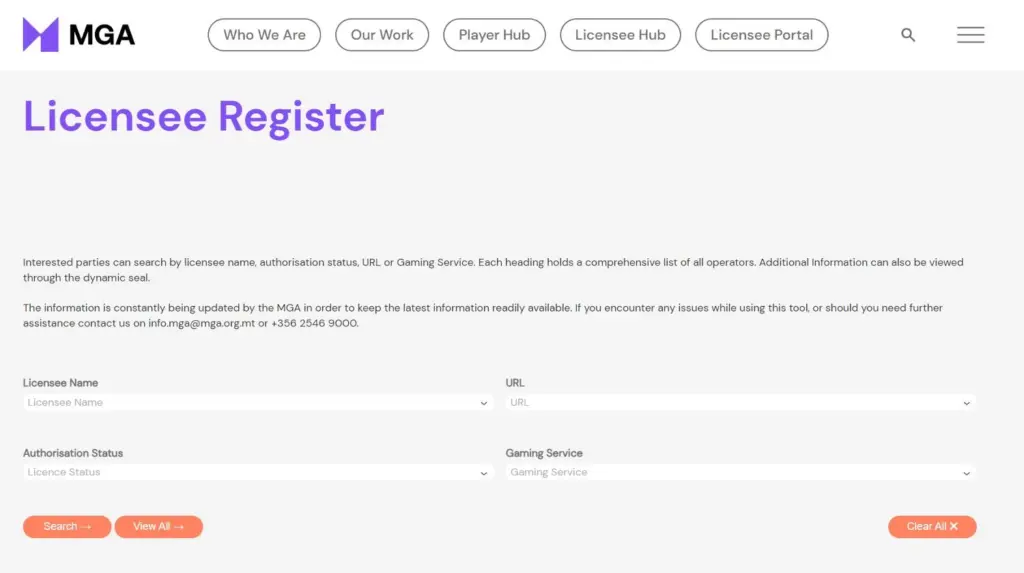
The classic mistake is trusting a regulator’s logo in the footer. Anyone can paste an image. A real license is always tied to a specific number and a specific legal entity, and you can verify it on the regulator’s own site. If an operator claims to be licensed but lists no number — or the regulator’s site finds nothing under that number — that’s already your answer.
Regulators also differ sharply in how strict they are. Licenses from Malta (MGA) or the UK (UKGC) come with hard requirements on protecting player funds and handling disputes. Offshore jurisdictions with minimal oversight do issue licenses, but offer little real protection when a conflict arises. A license by itself isn’t proof of fairness; what matters is whose license it is and what that regulator actually does when there’s a complaint.
A separate issue is the legal status of gambling where you live. In many countries online gambling sits in a grey zone: an operator may hold a foreign license, but that doesn’t automatically make your play legal or give you the protection of local law. Before registering, it’s worth understanding how your jurisdiction treats this kind of betting — not as a moral question, but as a question of your rights if a dispute happens.
A Fast License Check
- Find the license number and the operator’s legal entity on the site, not just the regulator’s logo.
- Open the regulator’s site directly (not via a link from the casino) and search the number in its register.
- Confirm the legal entity in the register matches the one named in the terms of service.
- If there’s no number, the register is empty, or the details don’t line up — don’t go further.
How to Read a Bonus, Instead of Trusting the Banner
“Bonus up to X plus this many free spins” is the shop window. The real terms live in the promotion rules — and that’s where it’s decided whether you’ll ever see that money.
The key figure is the wagering requirement. A note like “x35” means you must bet the bonus amount thirty-five times over before any winnings can be withdrawn. If the bonus equals your deposit and the wagering is high, the real volume of bets needed can run to many times what you put in. The higher the multiplier, the less valuable the bonus — and the more often it stays out of reach.
Just as important is what counts toward wagering. Slots often count 100%, while table games and live casino count 10–20% or are excluded entirely. Someone grinds the bonus in blackjack, sees the progress barely move, and doesn’t realize that game contributes almost nothing. That’s not a glitch — it’s a term they didn’t read.
Then come the restrictions that fire at the worst possible moment:
- Time limit. The bonus must be cleared within a set window (often a few days). Miss it, and it expires along with any winnings tied to it.
- Max bet while a bonus is active. There’s usually a cap on bet size. Exceed it and your winnings may be voided — and by the rules, the operator is within its rights.
- Withdrawal cap on bonus funds. Sometimes the amount you can cash out from bonus money is limited, even if you won more.
- Banned strategies. Covering the whole board in roulette, or low-risk clearing schemes, are typically prohibited outright.
The practical takeaway is simple: a bonus with high wagering, a short window, and a low contribution from the games you actually like is more often a burden than a gift. Sometimes playing without a bonus is the better call, because your winnings are yours immediately and aren’t chained to conditions.
A Minimum Check Before Claiming a Bonus
| What to look at | Why it matters |
|---|---|
| Wagering multiplier (x__) | Sets the real bet volume before withdrawal |
| Game contribution | Slots ≠ tables; your game may barely count |
| Clearing window | Miss it and the winnings expire |
| Max bet with bonus active | Going over voids the winnings |
| Withdrawal cap on bonus | Limits how much you actually take out |
Signs of a Platform That Will Give You Trouble
Some warning signs are visible before you register, if you know where to look.
The first is murky withdrawals. A reliable platform spells out withdrawal methods, timeframes, and limits clearly and up front. If that information is hidden, contradictory, or only appears after you deposit — that’s a bad sign. Easy to put money in, hard to get it out is the most common complaint about shady casinos.
The second is aggressive bonus marketing paired with silence on the terms. The louder the banner about a “huge bonus” and the quieter it is on wagering and limits, the more careful you should be. A serious operator doesn’t hide its promotion rules.
The third is support that won’t answer specifics. Before registering, you can message the chat with a concrete question about withdrawals or verification. A canned non-answer instead of a real reply tells you how support will look during an actual dispute.
The fourth is verification (KYC) friction. Identity checks at withdrawal are a normal, mandatory practice for licensed operators. What’s not normal is using verification as an excuse to stall a withdrawal indefinitely, demanding one new document after another. It’s worth checking in advance what the platform asks for KYC and at which stage.
The fifth is reputation away from the operator’s own site. Reviews on the casino itself are useless. More telling are independent venues where players post complaints and disputes get dissected. Systematic complaints about withheld payouts justified by alleged rule violations are exactly what to search for deliberately.
Payments: Easy In Doesn’t Mean Easy Out
The list of deposit methods on the front page is almost always longer than the list of withdrawal methods. That’s technically normal, but it’s the withdrawal side that decides whether a platform actually works for you.
Before depositing, check: can you withdraw with the same method you deposit with; what are the minimum and maximum withdrawal amounts; is there a fee; and how long processing really takes. Crypto withdrawals are usually faster but add their own complexity — exchange rate, networks, addresses — and a mistake there can’t be undone. Bank and local methods are slower but more familiar to fall back on in a dispute.
Handle verification before your first withdrawal as its own step. It’s better to clear it right after registering, with a clear head, rather than at the moment you want to grab a win. That way you find out in advance whether your documents are in order and don’t hit a delay out of nowhere.
Responsible Gambling: Tools That Protect You From Yourself
Licensed operators are required to provide self-control tools, and the time to use them is before you need them — meaning right away, not when you’re already chasing losses.
- Deposit limit. A cap on how much you can fund per day, week, or month. The simplest way to bound your risk in advance.
- Loss and stake limits. These cap not your deposits but how much you can lose or bet over a period.
- Time limits and session reminders. They counter the main trap — losing track of time at the table.
- Time-out. A short break (from a day to several weeks) during which account login is blocked.
- Self-exclusion. A long-term or indefinite account block. A serious step for anyone who feels control slipping.
The catch: these tools only work if you set them in advance and clear-headed. A limit set after a big loss, “to punish yourself,” usually gets removed right after. So it makes sense to configure them on day one, when there’s no heat and no emotion involved.
It’s also worth honestly knowing the warning signs in yourself: playing to win back what you lost, betting with borrowed money, hiding the play from people close to you, raising stakes to recapture the old feeling, irritation when you try to stop. These aren’t a “weakness of character” — they’re recognizable signs of problem gambling, and when they show up it’s worth reaching out for help, to a professional or a dedicated support service. Gambling shouldn’t be a way to earn money or solve financial problems; the moment it stops being entertainment is the moment to stop.
A Short Checklist Before You Hit “Register”
If it all comes down to one pass, there are five questions to close before you create an account:
- License — number verified in the regulator’s register, legal entity matches.
- Legal status — you understand how your country’s law treats this play and what rights you have in a dispute.
- Bonus — you’ve read the wagering, game contribution, window, and limits; and you understand that no bonus may be the better deal.
- Withdrawal — method, timing, limits, and fees are clear in advance, and KYC is realistically passable.
- Control — you’ve decided in advance on a deposit limit and on a sum you’re prepared to lose in full.
If any of these has no answer, that’s not a reason to hurry — it’s a reason to stop. A good platform answers these questions openly and before any money changes hands. The one that hides the answers until after you deposit has, in effect, already told you everything about itself.