
A “paisa wala game” is the everyday term for online games where you stake real money hoping to win more, and in India the search almost always leads to fast crash formats like Aviator. Here is the honest answer up front: as a way to earn money, it does not work, because the math is built to favor the operator over time.
There is also a bigger development most earning articles skip. As of 2026, online real-money games are banned in India under the Promotion and Regulation of Online Gaming Act, which came into force on 1 May 2026. This guide explains what these games actually are, what the law now says, why the earning framing is misleading, and how to avoid the scams and security traps around them.
The honest verdict
If you found this while searching for an online money game or a real money earning game in India, the realistic takeaway is that you are looking at entertainment with a built-in loss rate, not an income source. Occasional big multipliers happen, but the underlying model is designed so that players lose more than they win across time.
The main risk now has three layers. First, legal: in India, offering or playing online real-money games is prohibited under current law, and the payment rails and advertising around them have been cut off. Second, financial: offshore sites that still accept Indian players operate outside any protection, so a blocked withdrawal has no recourse. Third, personal: fast crash games are among the easiest formats to lose control on.
Before anything else, check what is legal where you actually live, never side-load an APK to chase access, and treat any prediction tool as a red flag rather than an edge.
What a paisa wala game actually is
The phrase covers a broad category, from casual reward apps to full casino-style products, but the searches that funnel into paisa wala game, online money game, and win game mostly land on crash multiplier games. Aviator, made by the provider Spribe, is the best-known example.

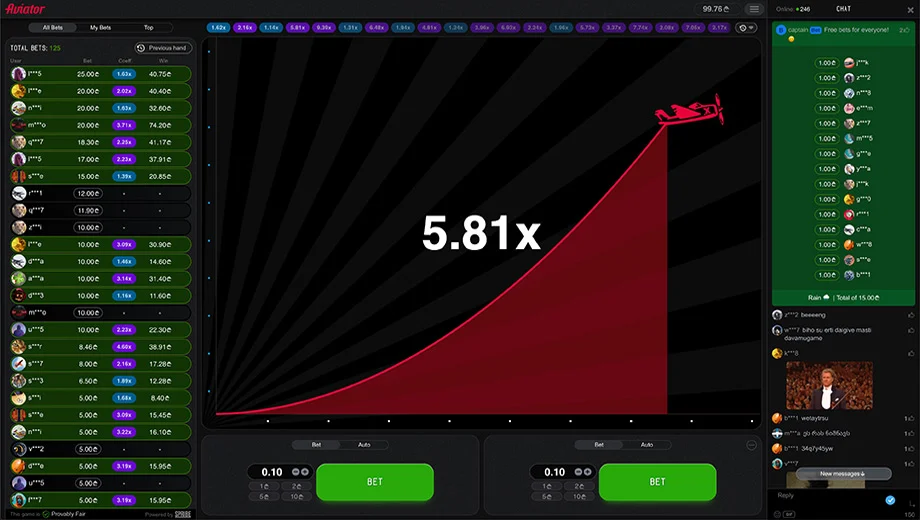
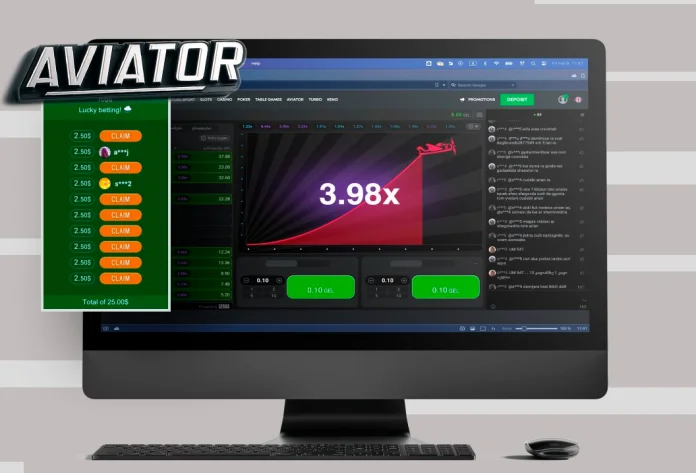
The mechanic is simple, which is exactly why it spreads. A round starts at 1.00x, the multiplier climbs in real time, and you cash out before it crashes. Exit at 1.80x on a ₹100 bet and you get ₹180 back; wait too long and the crash takes the whole stake.
There are no reels, paylines, or symbols. The entire game is a timing decision against a rising number. Rounds finish in seconds, the interface runs on any phone, and that accessibility is what makes people read it as an earning opportunity rather than what it is: a high-variance bet.
The 2026 reality in India: real-money online games are banned
This is the part that changes the whole picture, and it is missing from many older guides. India moved from a patchwork of state rules to a single national ban. The Promotion and Regulation of Online Gaming Act, 2025 prohibits online money games regardless of whether they are based on skill, chance, or both, and the accompanying Rules were notified in April 2026, with the framework in force from 1 May 2026.
The prohibition is deliberately wide. It covers the games themselves, their advertising, and the financial transactions that power them, so banks and payment systems cannot legally process deposits or withdrawals for these platforms. Penalties for operators run to imprisonment and heavy fines. The law has been challenged in the courts, so the long-term constitutional outcome is still unsettled, but the ban is the operating reality on the ground in 2026.
What that means for an ordinary player is concrete, not abstract. Several large real-money operators suspended staking products, payment paths became harder or unavailable, and any site still serving Aviator for real stakes to Indian players sits outside the legal framework. That means no consumer protection and no reliable recourse if a withdrawal is frozen.
Why earning games is the wrong frame: RTP and house edge
| Attribute | Value |
| Provider | Spribe |
| Game type | Crash multiplier |
| RTP | Around 97% theoretical |
| Maximum multiplier | Up to 10,000x |
| Bets per round | Up to two |
| Access format | Browser, operator app, APK |
| Platforms | Mobile, desktop, tablet |
| Fairness layer | Provably fair cryptographic system |
Even setting the law aside, the economics do not support the income idea. Crash games like Aviator advertise a theoretical RTP around 97%, which sounds generous until you read it correctly. RTP is a long-run average across millions of rounds, not a per-session guarantee. The flip side of a 97% return is a house edge of roughly 3%, and that edge is the operator margin on every rupee wagered over time.
Put a number on it and the problem becomes obvious. A 3% edge means that, on average across many rounds, you lose about 3% of everything you wager, not 3% of what you deposit. Replay a ₹100 stake a hundred times and you have wagered ₹10,000 of turnover, with an expected loss near ₹300 before variance even enters the picture. Fast crash games can generate that turnover quickly.
Two facts seal it. Each round is statistically independent, so a string of low crashes never makes a big one due, and a recent win does not lower your next round risk. Variance cuts both ways: the same randomness that produces an occasional 10x also produces long losing runs. Short-term wins feel like skill or a system; over a longer horizon they are noise inside a model that pays out less than it takes in.
Aviator demo and why practice does not create an edge
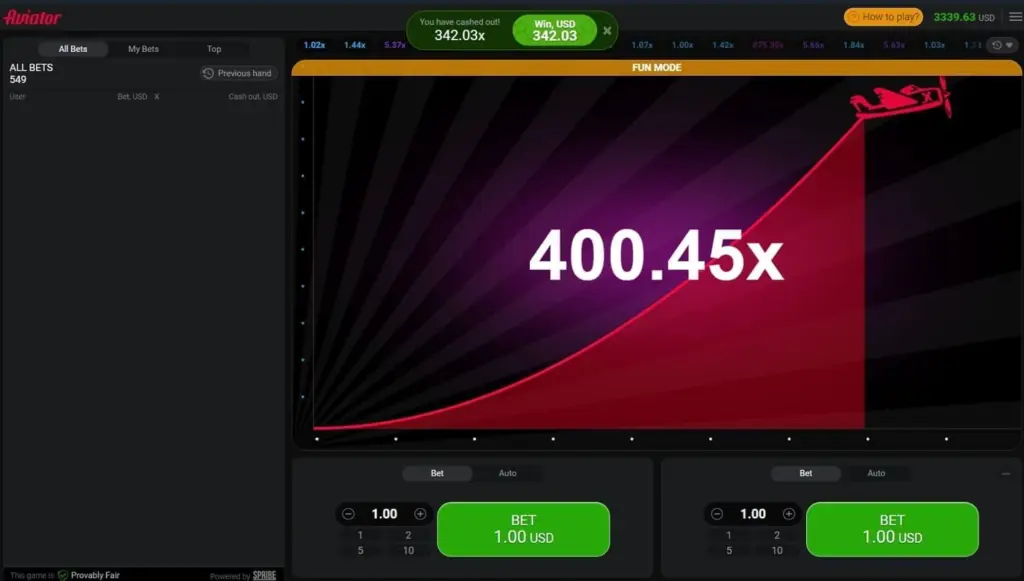
Aviator demo mode can help a user understand the interface, the cash-out button, auto-bet settings, and the speed of the multiplier. That is useful for learning mechanics, but it does not change the underlying odds. The demo can also create false confidence because virtual money removes the pressure that appears in real-money play.
If a user is in a jurisdiction where real-money play is legal, demo mode should be treated as interface training only. It is not proof that a strategy works, and it does not reveal future crash points.
Spotting the scams around it: predictors and APKs

The earning belief keeps a whole ecosystem of false tools alive: predictor apps, signal groups, and hack bots that claim to forecast the next crash. They cannot. Aviator uses a provably fair system, which lets you verify after a round that the result was not tampered with, using published cryptographic hashes. That is verification, not prediction, and a hash cannot be run backward to reveal what is coming.
The download side adds real danger, since side-loaded APK files are a common delivery method for malware, credential theft, and clipboard hijacking that can swap a copied payment address.
Red flags that should close the tab
- guaranteed wins, 100% accurate signals, or claims to predict multipliers
- forced app or APK installation before access
- hidden operator details, with no identifiable company, licence, or contact route
- deposit or payment demands to unlock a prediction or bonus
Any one of these is enough reason to walk away. Reliable software never promises certainty in a random system.
If it is legal where you are: play it as entertainment, not income

Laws differ by country and, in some places, by state, so the first step anywhere is confirming the rules that apply to you. Where real-money play is legal and you still choose to do it, the only sane framing is entertainment with a fixed cost.
- decide a session budget before opening the game and treat it as money you are prepared to lose
- keep stakes small relative to your balance
- set a fixed cash-out target instead of improvising during a fast round
- do not raise your bet to recover a loss, because the next round odds are unchanged
- stop if you are betting more after a loss, playing longer than planned, or hoping the game will cover money you need
Evaluating platforms and payment risk
| Platform factor | What it affects |
| Licensing information | Regulatory credibility |
| Payment methods | Deposit and withdrawal convenience |
| Game provider authenticity | Access to original Spribe Aviator |
| Bonus conditions | Wagering requirements |
| Mobile performance | Gameplay stability |
Older guides often compare platforms by bonuses, payment methods, and mobile performance. In the 2026 Indian context, that comparison is secondary to legality. If a platform is still pushing real-money Aviator to Indian users, the basic question is not whether it has UPI, a bonus, or a fast app; it is whether the activity is legal and whether the user has any protection if funds are blocked.
The same 2025 law deliberately keeps a legal lane open for skill-based competitive e-sports and for online social games played without stakes. Those formats do not put your money or account at the same risk.
What to actually do with this
Start with the law that applies where you live, because in India in 2026 that question is already answered: real-money online games are prohibited, and the platforms offering them sit outside any protection. If you are somewhere it is legal and you play anyway, go in treating it as paid entertainment with a known loss rate, never as a paisa wala game that earns.
Skip APKs and predictor tools entirely; the security downside is real and the predictive upside is zero. If the appeal was income rather than fun, that is the clearest sign this is the wrong tool, because the one thing the math reliably produces over time is the house edge.